

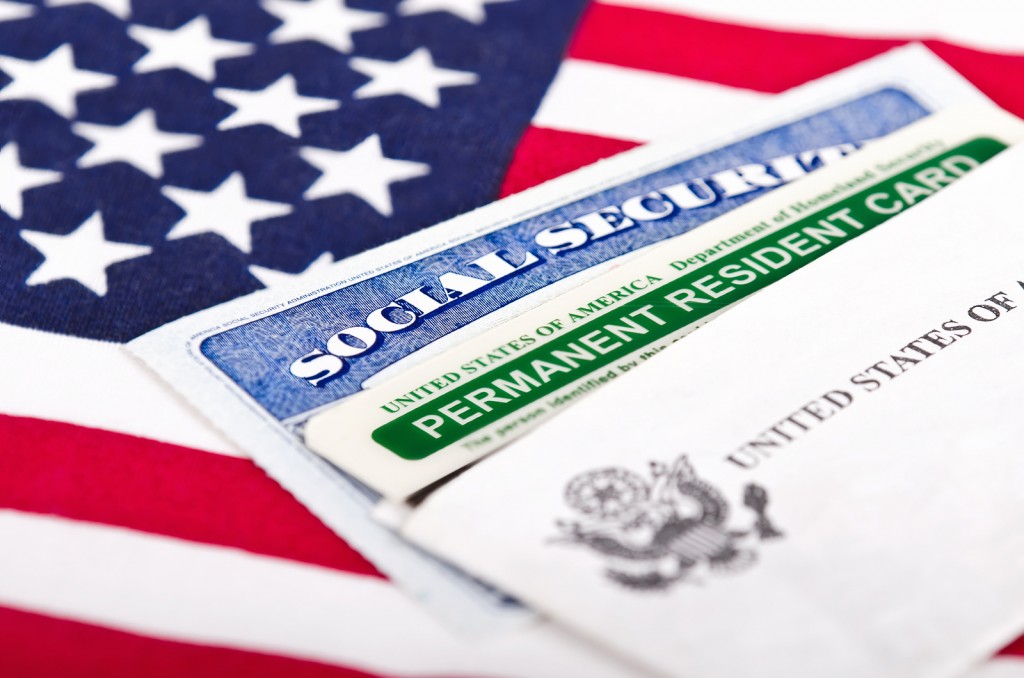
Employment Immigration, USCIS

Delivering Solutions For Your Future
Immigration in America, USA flag

Renewing Your Work Permit: Essential Guide for Immigrants in the USA

November 2, 2025

As an experienced New York immigration lawyer serving clients from Russia and Ukraine and around the world, I understand the stress you face when your employment authorization is nearing expiration. For high-income professionals, families supporting children, or asylum-seeking individuals, losing your ability to work legally in the United States can mean financial uncertainty, job-loss risk, and emotional strain. That’s why renewing your work permit (Employment Authorization Document or EAD) through U.S. Citizenship and Immigration Services (USCIS) must be taken seriously—and done well.

In this blog I’ll walk you through how to renew your work permit, focusing on the latest policy changes, what has shifted in 2025, the filing process for the form Form I‑765, filing fees, important deadlines, and practical tips to avoid gaps in your work authorization. I’ll also explain how the recent elimination of automatic extensions affects you—and what steps you should take now to stay protected.

1. Why renewing your work permit matters

If your EAD is about to expire, you may not be able to continue working legally in the U.S. without a timely renewal. For many immigrants—especially recent arrivals, those in asylum or adjustment of status processes, or spouses of visa-holders—work authorization is the foundation of their livelihood, family support, and integration.

When you fail to renew on time or allow a gap in employment authorization, consequences may include:

  • Loss of employment and income.
  • Employer may no longer accept your expired document for Form I-9 verification.
  • A gap in legal work may affect your immigration case or eligibility for future benefits.
  • Stress and disruption in your career and family life.

I help clients for whom work authorization is critical: those filing asylum, VAWA, waivers, EB2 NIW, EB1 or O1 visas. Renewing your EAD properly is a key step to maintaining stability while your immigration case progresses.

2. What has changed: No more automatic extensions

A major update has occurred: Until now, many renewal applicants were eligible for an automatic extension of up to 540 days while their renewal application was pending. E-Verify+3USCIS+3USCIS+3
But as of October 30, 2025, for most renewal applications filed on or after that date, this automatic extension will no longer apply.

In other words: if you file your renewal after the cutoff, you cannot assume you will be authorized to keep working simply because you filed on time. You must hold a valid EAD or face the risk of unauthorized employment (which in turn could harm your immigration case).

Here are the key take-aways:

  • If you timely filed your renewal before your current EAD expired and before October 30 2025, you may still be covered by the automatic extension rules.
  • If you file on or after October 30, 2025, and you are in an eligibility category that previously benefited from automatic extensions, your continued work authorization may end on the expiration date of your current EAD unless your renewal is approved.
  • Certain limited categories (for example, some TPS beneficiaries) may still be subject to automatic extension rules under regulation or Federal Register notices—but you must check your specific category. USCIS+1

Why this matters particularly for you:
If you are a Russian national, Ukrainian national, or immigrant in asylum/adjustment/VAWA/EB2 NIW situations—many of whom rely on EADs—you cannot rely on “just having filed” to keep working. You need positive steps now.

3. The renewal process: How to file Form I-765

Let’s walk through the steps of renewing your EAD using Form I-765—the core filing you must complete.

Step A: Confirm your eligibility and category
Visit the USCIS Form I-765 page. USCIS
You need to know your “Eligibility Category” code (such as (c)(9) adjustment of status, (c)(8) asylum applicant, etc.). Use the Form I-765 instructions for guidance. USCIS

Step B: Timing – when to file
USCIS advises: if you wish to renew, you should file Form I-765 within 6 months of the expiration date of your current EAD. USCIS
But given the removal of automatic extensions, I recommend filing as early as allowed—for many, up to 180 days before expiration, provided you still meet eligibility. This gives you more time and reduces risk of a gap.

Step C: Gather required documents
From USCIS’s checklist: USCIS
Typical documents for renewal include:

  • Copy of your current EAD (front and back).
  • Copy of your Form I-94 or other proof of your status or pending application.
  • Two passport-style photos (if required).
  • Signed and dated Form I-765 from the correct edition.
  • Filing fee (or fee waiver request if applicable).
  • If applicable, Form G-1145 for e-notification.
  • A mailing address where you can reliably receive mail from USCIS.

Step D: Complete the form carefully
On Part 1 of Form I-765, select “Renewal of my permission to accept employment.”
Be sure to complete all fields accurately, use correct edition of the form, and sign the form. Mistakes or outdated editions often cause delays or rejections.

Step E: File online or by mail
If your category allows, you may file online through your USCIS account. Otherwise, you must send the paper application to the correct address. Use the “Direct Filing Addresses for Form I-765” page. USCIS
Ensure you are mailing to the correct lockbox for your category and location; if you send to the wrong address, your case may be delayed or rejected.

Step F: Track your case and respond promptly
Once filed, USCIS will issue a receipt notice (Form I-797C). Use your receipt number to track status online via “Check Case Status.”
If you receive a Request for Evidence (RFE), respond promptly before deadline. Delays can lead to a denial and increase risk of employment gap.

4. New risks and how to avoid employment gaps

Given the elimination of automatic extensions for many, you must be more proactive than ever. Here are key risk-points and how to manage them:

Risk 1: Filing late or too close to expiration
If you file very close to your current EAD’s expiration, you risk that the renewal decision may not arrive in time—and without automatic extension you may lose work authorization.
Tip: File as early as your eligibility allows—ideally 90-180 days before expiration.

Risk 2: Assuming you have an automatic extension when you do not
If your category was eligible for automatic extension before but now you file after Oct 30, 2025, you cannot assume it applies.
Tip: Double-check your eligibility category and when your renewal is filed. If unsure, stop working when your EAD expires until you have a valid EAD in hand (or legal reason you are covered).

Risk 3: Job interruption harming your immigration case
Working without valid authorization can jeopardize your underlying immigration status or future benefits.
Tip: Keep proof of filing, maintain documentation of your renewal, and stay out of unauthorized employment. If there is a gap, speak with your immigration counsel immediately.

Risk 4: Address changes = missing your card
If your address changes after filing, USCIS may send your card to the old address and your employer will flag you as unauthorized.
Tip: Update your address via USCIS and USPS. Use an address where you reliably receive mail.

Risk 5: Employers not understanding the rule change
Some employers may rely on old policies of automatic extensions and continue employment based on old assumptions. Now they must verify that the EAD is valid or that you hold a receipt for a timely-filed renewal and the category is still eligible (if applicable). USCIS
Tip: Provide your employer with your receipt notice and, if relevant, confirm eligibility for automatic extension. Discuss the rule change with your HR or immigration compliance officer.

5. Special categories and considerations

Here are some special situations to keep in mind:

  • Asylum applicants: If you are in the U.S. filing or have filed for asylum, you may be eligible for an EAD under category (c)(8). When renewing, ensure you are in the correct classification and file timely.
  • Adjustment of Status (Form I-485) applicants: If you have a pending I-485 and hold a renewal EAD (typically (c)(9)), you must renew ahead of expiration.
  • Spouses of H-1B (H-4 EAD), L2 EAD, etc.: These may also hold EADs and must observe this new policy.
  • Temporary Protected Status (TPS) beneficiaries: Some TPS renewal applicants may still obtain automatic extension if regulation allows; check the TPS designation and latest USCIS guidance.
  • Non-immigrant work visa holders: If your work authorization is based on a non-immigrant employment classification (e.g., L-2, E-2, O-3) rather than an EAD, you should consult counsel about renewal or extension differently.
  • Immigrants in high-income professional roles: If you are relying on your EAD to continue employment in a high-paying position (especially relevant for your audience of $50k+ income, Russian nationals, etc.), losing employment authorization could trigger job-loss, family stress, or visa status changes. Prioritize renewal.

6. Practical checklist: What to do in the next 30-90 days

Here’s a practical action plan you can implement now:

  1. Review your current EAD card. Note the “Card Expires” date and your Eligibility Category Code.
  2. Determine when you become eligible to file—some categories allow up to 180 days before expiration.
  3. Decide whether to file online or by mail. If by mail, locate the correct lockbox for your category (see USCIS address list).
  4. Collect supporting documents: current EAD copy, I-94, passport ID page, photos, filing fee or waiver, Form G-1145.
  5. Complete the correct edition of Form I-765 (check edition date at bottom of form) and sign it.
  6. File the application. Keep copies of everything and your postal/tracking information if mailed.
  7. Within days after filing, update your employer (HR or immigration compliance) and provide them with your receipt notice. Explain the changed rule and confirm your current employment authorization status.
  8. Monitor the case online. If you receive an RFE, respond quickly.
  9. In case the filing is very late (close to expiration) and there is a risk of a gap: consult counsel about contingency planning (e.g., changing to another visa category, filing expedited request if urgent).
  10. Change of address? Submit the change via USCIS and USPS promptly to ensure timely delivery of your EAD.
  11. After approval, update your Form I-9 at work if required. Provide your employer a copy of the new EAD.
  12. Keep a digital and physical copy of your EAD, renewal receipt, and file in a secure place.

7. Why hiring a New York immigration lawyer makes a difference

As you navigate this renewal process—and especially in light of the new no-automatic-extension rule—you’ll want experienced guidance. That’s where I come in:

  • My law firm focuses on immigration law in New York, serving Russian nationals, asylum seekers, EB2 NIW and EB1/O1 visa candidates, VAWA/self-petitioners, and individuals seeking waivers or citizenship.
  • I stay current with the latest updates at USCIS, including policy changes such as the termination of automatic EAD extensions.
  • I provide practical, step-by-step advice (not just legal theory) to ensure your work authorization remains valid, your job remains secure, and your immigration case remains on track.
  • You’ll benefit from my track record of successful outcomes, my bilingual service (Russian & English), and my commitment to clear communication.
  • If you feel uncertain about your eligibility, timing, or how the rule change affects your situation, a consultation may save you time, money, and risk.

8. Final reminders

  • Don’t wait until your EAD is days from expiration to think about renewal. With the automatic extension rule gone for many filings, you risk unauthorized employment.
  • Document everything: Notice of filing, tracking information, receipt number, correspondence with employer, proof of mailing.
  • Inform your employer and ensure they know you’ve filed and your status. If your authorization lapses, you must stop working until you have valid documentation.
  • Stay updated: USCIS issues alerts and changes may occur. Always refer to the official site rather than relying on second-hand sources.
  • Get counsel if you: have criminal history, disciplinary issues, complex immigration background, or are unsure about your category.
  • Maintain your immigration case momentum: work permit renewal is just one part of your broader immigration journey (asylum, adjustment, VAWA, EB2 NIW, citizenship). A lapse undermines that journey.

As a top New York Immigration lawyer dedicated to helping high-income immigrants, recent arrivals, and families from Russia, Ukraine, and beyond, I’m here to guide you through this crucial step. If you need help assessing your eligibility for work permit renewal, preparing Form I-765, avoiding employment gaps, or aligning your renewal with your larger immigration strategy—I’m ready to assist.

📞 Call me today at 917-885-2261 for a consultation and let’s make sure your work authorization remains uninterrupted and your immigration goals stay on track.

USCIS WILL RESUME DEFERRED ACTION PROGRAM

September 20, 2019

Author: New York Immigration Lawyer Alena Shautsova

About a month ago USCIS announced that it would stop the Deferred action program for non-military members. The public reacted by convincing USCIS that the deferred action program should be restored. Several weeks later, USCIS agreed.

What is Deferred Action?

Deferred action is a government’s act to accommodate an individual even though he/she does not have a recourse under the current Immigration law. As a rule, deferred action happens in a form of a parole. It can be parole in place; parole instead of a visa/status. Often, deferred action is granted to a person who is in removal proceedings. But USCIS also practices an affirmative deferred action: the one for individuals who are not in removal proceedings. Government regulations characterize deferred action as “an act of administrative convenience to the government which gives some cases lower priority.” 8 C.F.R. § 274a.12(c)(14).

Who can apply for Deferred Action?

Anyone present in the US with severe medical conditions, when the treatment for those conditions is unavailable in their home countries, may ask USCIS to grant them deferred action in the form of parole which will allow them to stay in the US without accumulating unlawful presence. Also, persons whose countries were affected by serious natural disaster, may likewise apply for deferred action.  During the validity of the deferred action, the person is considered to be safe from removal/deportation.

How to Apply for Deferred Action?

Apparently, there is no centralized, nation-wide procedure for the deferred action. A person would have to submit the request to the local USCIS office. A front desk would take these applications and provide a receipt stamp. An applicant must be out of status in order to file for deferred action.  Applicants will be fingerprinted. There is no application form and there is no application fee. An applicant will have to present evidence of the need to stay in the US, for medical deferred action it would be affidavits, medical records, doctor’s reports. To file, a person typically also would need to present:

  1. Signed written request
  2. Form G325A
  3. Copies of passport, visa, and birth certificate
  4. 2 passport-style photos

Beneficiaries of deferred action can apply for employment authorization. A deferred action may be granted to the person and his/her immediate relatives. A deferred action would typically be granted for a period of two years.

In 2011, the USCIS ombudsman recommended that USCIS adopts unified procedures for adjudicating deferred actions requests. In 2012 USCIS issued a memo U.S. Citizenship & Immigration Servs., Standard Operating Procedures for Handling Deferred Action Requests at USCIS Field Offices 3 n.1 (Mar. 7, 2012) (“USCIS Standard Operating Procedures”). However, the procedure itself still remains largely unknown and varies from office to office.

FOIA: The Importance of Having Your Full Immigration Record

May 20, 2019

FOIA: The Importance of Having Your Full Immigration Record

Author: New York Immigration Attorney Alena Shautsova

FOIA stands for Freedom Of Information Act and is essential for one’s Immigration case. By filing FOIA request, one may not only receive a copy of his/her Immigration file form an Immigration court, Board of Immigration Appeals or USCIS, but also obtain records of one’s interactions with the CBP at the border; receive notes about one’s testimony during his/her Asylum interview and obtain records from the Stokes interview.

A response to FOIA has to be current: if you received a “CD” (the government usually delivers responses to FOIA requests on CDs) in the past but since then had some immigration history: forms filed, a decision made, etc, you need to obtain a “fresh” FOIA response.

One of the most overlooked and underused FOIA requests is an OBIM FOIA: U.S. Office of Biometrics Identity Management (“OBIM,” formerly US-VISIT). Basically, if you would like to receive your files regarding interactions with the Border Patrol officials, you need to file a request for FOIA with OBIM. OBIM requests may be submitted by letter request; Form G-639 by mail, fax, or email; or electronically through the DHS Online Request Form. They should include an original fingerprint card or A-number.

Another important source of information is CBP. A request for records to the CBP may reveal:

Apprehensions and detentions at the border: • Interactions with CBP at the border or in the interior • Form I-94 records • Voluntary return records • Records of entries and exits xi • Expedited removal orders • Advance parole records obtained through CBP.

Unfortunately, the government does not have to disclose all the information. Often,  important information is being withheld according to the provisions allowing the government not to share information that they use for investigation purposes, for example. If, however, an adverse decision is made in one’s case, he/she is entitled to have an opportunity to review and respond to the adverse information in the file.

Finally, often, as a result of the lawsuits, the government is forced to share previously withheld information. What was not available 8 years ago, now, may be available, in other words. If you are seeking to “fix” an old Immigration problem, a FOIA request is a must. It takes several months before you receive a response, but the wait is worth it. Through FOIA you can also obtain copies of lost documents; information regarding old filings that potentially can qualify you for an Immigration benefit; and, of course, information that was filled in the forms which can be checked for accuracy.

If you need assistance in obtaining your files, please call 917-885- 2261 for an appointment.

Unlawful Presence For F, M and J Students

May 25, 2018

Unlawful Presence For F,  M and J Students

Author: New York Immigration Lawyer Alena Shautsova

Major changes are coming to the Immigration filed and how the laws are implemented. For almost two decades, students admitted on F, J, and M programs were admitted for Duration of Status (D/S) and were not acquiring unlawful presence if they overstayed their visas unless an Immigration Judge or a DHS made a determination that their status was terminated. 

Previously, for example,  a J1 student who came on a Work and Travel program and overstayed her visa, would not face the 3/10 year unlawful presence bars if she later left the US and applied for, let’s say an Immigrant visa.  The amount of time that was overstayed would not matter.  Now, however, DHS made it clear, that even those admitted for Duration of Status will be accumulating the unlawful presence time after their authorized stay expires (stay including the authorized periods that are grunted to students after the expiration of their programs which is 60 days for F students and 30 days for J students). 

It means that those who overstay their student visas, dispte the D/S admission will face 3/10 unlawful presence bars and will have to take this into consideration when making decisions about applying for reinstatement, changing status or returning back home.  A person who is subject to an unlawful presence bar must receive a waiver to come back to the US before the ban expires. 

The new calculation of unlawful presence will come into effect on August 9, 2018. Prior to this date, the old rule is in effect. 

USCIS Will Destroy Undelivered Documents

April 3, 2018

USCIS Will Destroy Undelivered Documents

Related image

Author: New York Immigration Lawyer Alena Shautsova

Sad news came today from USCIS: the agency announced that it will start physically destroying documents green card, employment authorizations and travel documents that were marked as “undeliverable” if within 60 days the beneficiary did not contact USCIS.

In my practice, I at times,  get notices from USCIS that the documents it was to deliver to my office somehow were “undeliverable.”  I am not sure where the confusion comes from: from the post office itself or incorrect spelling of addresses, but it does happen. Imagine also, a person after an interview is told that USCIS will make a decision within 90 days.  A person does not expect the green card to arrive earlier than 90 days. A person may not even know that USCIS tried to deliver his/her green card and does not contact USCIS within 60 days…. I just do not see how this new practice will make life easier for anyone. I cannot imagine that anyone who spent time and money on Immigration documents would intentionally fail to contact USCIS within two months period. If people would miss the 60 days deadline, it is likely because they had  no clue that the document was attempted to be mailed to them. Now, on top of waiting for the document, they will find an unpleasant surprise: their documents will be destroyed and they will have to file for the replacement….


I 601A Provisional Waiver: Step by Step Guide

March 27, 2018

I 601A Provisional Waiver: Step by Step Guide

Author: Provisional Waiver Attorney Alena Shautsova

A provisional  I 601A waiver waives the unlawful presence bar for those who have certain LPR or USC relatives in the US. An unlawful presence bar applies to all who accumulated unlawful presence in the US, left the US, and now are applying for Immigration benefits from outside the US.  The positive side of this waiver is that  unlike many waivers that can be filed only once the person departed the country, I601A can be filed for while the person is still in the US; and second, recently US relaxed the standard for granting the waiver, and now, the person can win the waiver either by providing that the relative will not be able to move with him/her outside the US (will suffer extreme hardship in case of a move) or that the relative will have extreme hardship in case the immigrant is removed out of the US.

Here are the steps for the waiver:

First Step: An approved Immigrant Petition

A person who is planning on filing for the waiver has to have an approved immigrant petition. It can be I 130, I 140, or even a selection in the DV lottery.

Second Step:

The petition has to the sent for processing to the National Visa Center, and a person has to pay the Immigrant Visa and Affidavit of Support Fees (when necessary)

Third Step:

Submitting I 601A to USCIS with a filing fee and supporting documents. Once the waiver is accepted by USCIS, the clock in the NVC is stopped.

Fourth Step:

Once the waiver is approved, USCIS informs NVC about the approval, the applicant has to submit DS 260 immigrant visa form and supporting documents for the visa. Then he/she has to wait for the visa interview; schedule the medical exam overseas and plan for the departure.

Fifth Step

An applicant will have to travel overseas for their visa interview. A consulate will use an immigrant visa that will be stamped in the passport. Upon arrival to the US, the applicant will have the actual “green card” mailed to the address they left on file with USCIS.

These are the most common steps for those who have never been in court and do not have other inadmissibility issues.


TPS Re-Registration Period for HAITI and EL SALVADOR

January 20, 2018

TPS Re-Registration Period for HAITI and EL SALVADOR

Author: New York Immigration Attorney Alena Shautsova

Recently, DHS announced that El Salvador and Haiti will lose TPS protection. It means that hundreds of Haitians and Salvadorians will have to find a different way to stay in the US legally or depart the US.

The US government, however, provided one last extension of TPS for both countries.  TPS for El Salvador is set to expire on September 9, 2019; and for Haiti on July 22, 2019.

It is important that persons who hold TPS currently apply for re-registration timely, not to lose their status before its expiration. the re-registration period for El Salvador  and Haiti is  January 18, 2018 – March 19, 2018. 

Some TPS holders who timely applied for the re-registration for Haitian TPS are still waiting for the decisions on their re-registration applications from 2017. In such cases, a person does not have to submit a new application. But only if the re-registration was applied timely in 2017.

USCIS will issue new EADs with a July 22, 2019 expiration date to eligible Haitian TPS beneficiaries who timely re-register and apply for EADs; the same goes for Salvadorians (the effective expiration day of their EADs would be September 9, 2019).

Existing EADs issued under the TPS designation of Haiti with the expiration date of January 22, 2018, is automatically extended for 180 days, through July 21, 2018. One does not need to apply for a new EAD in order to benefit from this 180-day automatic extension. However, if one wants to obtain a new EAD valid through July 22, 2019, he/she must file an Application for Employment Authorization (Form I–765) and pay the Form I–765 fee.

The same is true for Salvadorians, only their EADs have a different expiration date according to the Federal notices.   DHS automatically extends the validity of EADs issued under the TPS designation of El Salvador for 180 days, through September 5, 2018.

For possible Immigration solutions related to the termination of the TPS status, please visit: https://www.shautsova.com/law-publications/solutions-haiti-tps-holders.html#.WmKglKinE2w.


EXTENSIONS OF NON-IMMIGRANT PETITIONS WILL BE REVIEWED AS NEW SUBMISSIONS

October 25, 2017

EXTENSIONS OF NON-IMMIGRANT PETITIONS WILL BE REVIEWED AS NEW SUBMISSIONS

Author: Work Visa Immigration Attorney Alena Shautsova

USCIS has recently announced that it will no longer rely on previous approvals when deciding petitions for extensions of certain non-immigrant work visas.

This new policy will affect L1 petitions the most.

The changes

If previously, when the same company would file for an extension of the L1 petition for the same employee, USCIS would generally rely on the first approved petition to determine the validity and sufficiency of the extension request, now, USCIS will consider each request for an extension as a new petition.

Specifically, the new policy states:

“In adjudicating petitions for immigration benefits, including nonimmigrant petition extensions, adjudicators must, in all cases, thoroughly review the petition and supporting evidence to determine eligibility for the benefit sought. The burden of proof in establishing eligibility is, at all times, on the petitioner. The fundamental issue with the April 23, 2004 memorandum is that it appeared to place the burden on USCIS to obtain and review a separate record of proceeding to assess whether the underlying facts in the current proceeding have, in fact, remained the same. Not only did this improperly shift the burden of proof to the agency contrary to INA § 291, but it was also impractical and costly to properly implement, especially when adjudicating premium processing requests.”

It means that a requestor for an extension will have to resubmit all documents that were necessary to qualify the beneficiary initially, plus more documents establishing qualifications for an extension. Such documents may be, but are not limited to: records of payroll, copies of tax returns, bank account statements, contracts, etc. (The large companies have different requirements).


Federal Judge Blocks Trump’s Third Travel Ban

October 17, 2017

Federal Judge Blocks Trump’s Third Travel Ban

Author: New York Immigration Lawyer Alena Shautsova

Today, on October 17, 2017, A Federal Judge in Hawaii blocked President’s Trump Third Travel Ban.  The third version of an Executive Order that was supposed to go into effect tomorrow, did not work. The judge stated that, sufficiently, this third executive order suffers from the same drawbacks that the previous two did: they are discriminatory and are too broad.  Interestingly, this Third Ban was supposed to cover North Korea and Venezuela.

What is going to happen next is that the parties are likely to meet again in the US Supreme Court.

So far, the human rights activists have won!


VAWA and ILLEGAL ENTRY

October 8, 2017

VAWA and ILLEGAL ENTRY

Author: VAWA Attorney Alena Shautsova

VAWA stands for “Violence Against Women Act” and essentially allows certain non-citizens to obtain a green card by sponsoring themselves if they were in a qualifying relationship with a US citizen or a permanent resident.  So, VAWA provisions may be used not only by married women but by men, children and certain parents.

One of the advantages of VAWA is that not only it allows a person to sponsor her/himself, but it also “erasers” certain grounds of inadmissibilities, and sometimes even works to waive the permanent bar!

For example, a VAWA beneficiary may receive a green card or adjust her status to one of a permanent resident even if she/her entered the US illegally. The VAWA self-petitioner is not required to show a “substantial connection” between the qualifying battery or extreme cruelty and the VAWA self-petitioner’s  unlawful entry. Also, a VAWA beneficiary who spent in the US more than a year illegally and then left the US and returned back illegally may avoid the permanent bar imposed on regular applicants in similar circumstances, if they qualify for a waiver  under INA 212(a)(9)(C)(iii). No waiver is available for non-VAWA petitioners. 

VAWA petition is, however, not helpful for K visa entrants. There is a mistaken approach that if a person entered the US on a K-1 (fiance) visa, he/she will be able to receive a green card if qualifies for I 360. This is not so yet.  I 360 may be granted, and automatically a person will get a deferred action – protection from removal, but not the green card. The adjustment of status for most such persons will be denied.

Now, persons who are abused or battered but do not have the required connection with a US citizen or a permanent resident, cannot benefit from the VAWA laws.  For example, if X had to flee El Salvador due to a violent husband, she will still be required to demonstrate that she has a legal entry or parole into the US before her application for a green card is granted.